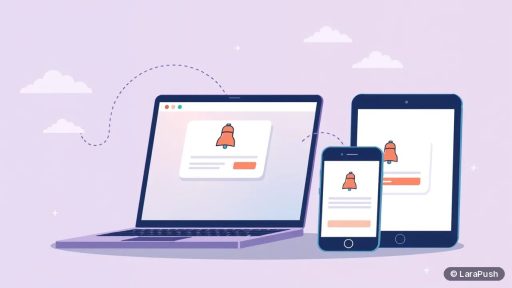
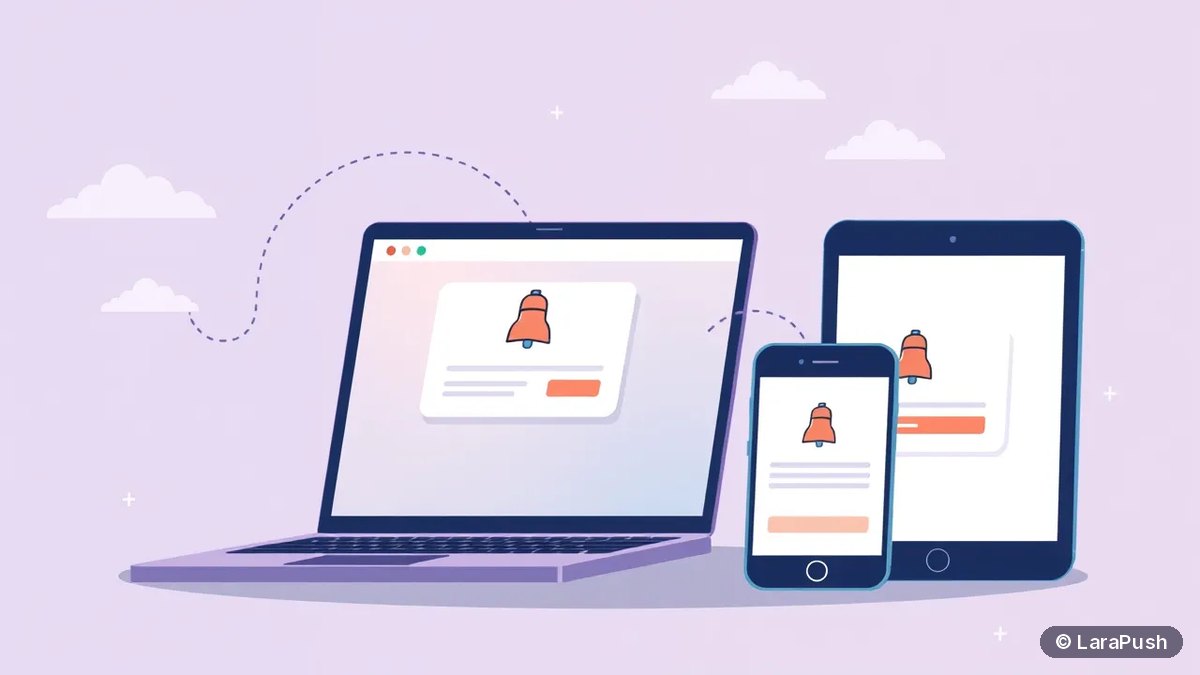

Yes. The same person can subscribe to web push on multiple devices, and each browser on each device creates its own separate subscription. A visitor who allows notifications on a laptop, a phone and a work PC appears as three subscribers. Web push identifies browsers, not people, so your subscriber count is a count of subscriptions.
This matters more than it seems. It affects how you read subscriber numbers, how often one person sees the same alert, and what “unlimited subscribers” pricing really means. Here’s how it works and what I’d do about it.
Can the same person subscribe to web push on multiple devices?
Yes, and they often do. Each push subscription belongs to one service worker registration in one browser profile. The W3C Push API ties a subscription to that registration, and each one gets its own endpoint URL and encryption keys.
So these all count as separate subscriptions for your site:
- Chrome on a Windows laptop and Chrome on an Android phone.
- Chrome and Firefox on the same laptop.
- Two Chrome profiles on the same computer, such as work and personal.
- Safari on a Mac and the Home Screen web app on an iPhone (iOS 16.4+).
Signing in to the same browser account on two devices doesn’t merge them. Each device still creates its own subscription with its own endpoint.
Why does web push count browsers, not people?
Web push is anonymous by design. A subscription contains an endpoint, a public key and an auth secret, as MDN’s PushSubscription page shows. It doesn’t include a name, an email address or a user ID.
That’s good for privacy, and it’s one reason opt-in is a single click. However, it also means your push panel can’t know that three subscriptions belong to one person unless your site tells it. I cover the privacy side in who owns push subscriber data.
What does this mean for your subscriber count?
Your subscriber count is really a subscription count. If many of your readers subscribe on both phone and desktop, the number of people you reach is lower than the number you see.
| What you see | What it really measures | Why it matters |
|---|---|---|
| Total subscribers | Active browser subscriptions | One person can count two or three times |
| Delivered count | Notifications accepted by push services | One person may get the same alert on each device |
| Clicks | Clicks across all devices | Usually one click per person, even with several devices |
| CTR | Clicks divided by delivered (or sent) | Can look lower when people have several devices |
So I treat CTR from multi-device audiences with care. If someone gets the same alert on three devices and clicks once, that’s one success, but the maths shows a third. For definitions, see my push notification metrics guide.
Will one person get the same notification on every device?
Yes, usually. When you send a campaign to all subscribers, every active subscription receives it. A person with notifications on their phone and laptop will see it on both.
There are some ways to reduce duplicate alerts:
- Segment by device type, for example send breaking news to mobile and long reads to desktop.
- Use the notification “tag” option, which replaces an older notification with the same tag on that device, as MDN documents.
- Send less often, so duplicates feel less noisy.
- Link subscriptions to logged-in accounts if your site has logins, then target accounts in your own code.
Note that the tag option works per device. It doesn’t stop the alert from arriving on a second device.
Can you link subscriptions to one user account?
Yes, if your site has user accounts and you build it. When a logged-in user subscribes, your site can store their user ID next to the subscription on your server. Then you can send to all of that user’s devices, or pick one. This is personal data processing, so cover it in your privacy policy and consent flow. The web push GDPR guide explains the basics.
Does unsubscribing on one device unsubscribe the others?
No. Blocking notifications or clearing site data on one device only ends that device’s subscription. The person’s other devices keep receiving notifications until they turn them off there too.
That’s worth explaining in your help text. Visitors sometimes block you on a laptop and are surprised the phone still gets alerts. A short note such as “turn off notifications on each device you use” saves support questions.
How does pricing treat multiple devices?
Push services generally count subscriptions, not people, because a subscription is all they can see. So pricing per subscriber really means per browser subscription. If your readers use several devices, a subscriber-based plan grows faster than your real audience.
I’d always check how a vendor counts before buying. My explainer on what “unlimited subscribers” means looks at the different models.
Where LaraPush fits
LaraPush is a self-hosted web push panel with unlimited subscribers on your licensed server, so extra devices per person don’t change what you pay. Its segmentation covers device, browser, operating system, country and more. That makes it practical to send some campaigns to mobile only, or desktop only, to cut duplicates.
There are trade-offs. You run the VPS, a licence covers one server, and there’s no free plan. Prices start from a one-time fee; see the pricing page. The audience segmentation page shows the filters. For other options, see my push notification services roundup.
Frequently asked questions
Often, yes. Each browser on each device creates its own push subscription, so a person who subscribes on a phone and a laptop counts as two subscribers. Push panels count subscriptions, because the subscription itself contains no personal identity.
Not by default. A push subscription only holds an endpoint and keys. If your site has logins, you can store the user ID with each subscription on your server, but that’s personal data, so cover it in your privacy policy.
Usually, yes. Every active subscription receives the campaign. You can reduce duplicates by segmenting by device type, sending less often, or targeting logged-in accounts with your own code.
No. Permission and subscriptions are stored per browser on each device. Blocking on one device ends only that subscription, and the person’s other devices keep receiving notifications until they’re turned off there.
No. Each push subscription has its own endpoint for one browser on one device, so a synced browser account doesn’t share it. Your site never receives a single subscription that covers several devices.