
Most free push notification services don’t send ads to your subscribers. They’re funded by subscriber caps, per-send limits and paid upgrades instead. However, some ad-supported programmes, such as iZooto’s Monetize plan, are free precisely because native ads go to your push audience. So check each vendor’s plan page and terms before you install.
Free push notification ads are a real model, not a myth. The difference is whether you opt in knowingly. In this post I explain how ad-funded push works, which well-known free plans are funded by caps instead of ads, and the checks I run on any free vendor before I let it near a subscriber list. Vendor details come from their own pages, checked on Oct 31, 2026.
Do free push notification services send ads to subscribers?
Some do, but most mainstream free plans don’t. The common free plans I’ve reviewed are funded by limits and upsells, and their pricing pages don’t mention ads:
| Service | How the free plan is funded (checked Oct 31, 2026) | Ads described on the pricing page? |
|---|---|---|
| Webpushr | Free up to 10,000 subscribers, then paid tiers | No |
| OneSignal | Per-send cap of 10,000 web subscribers; paid Growth plan | No |
| SendPulse | Free up to 10,000 subscribers; paid Pro plan | No |
| PushAlert | Free up to 3,000 subscribers; paid plans | No |
| Gravitec | Notify up to 10,000; “Powered by Gravitec.net” credit | No ads, but a branding credit |
| iZooto Monetize | Free; native ads sent to your push audience | Yes, that’s the model |
“Not on the pricing page” isn’t the same as “never”. Terms can change, so read the current terms of service yourself. For the full list of free limits, see best free push notification services.
How do ad-supported free push plans work?
Ad-supported push plans work by placing paid ads into the notifications your subscribers receive. The vendor sells that ad space to advertisers and shares part of the revenue with you.
iZooto’s Monetize page describes it plainly. It sends native ads on both web and app push notifications, aggregates demand from ad platforms (DSPs), and gives publishers a revenue share with net 60-day payouts. In return, the plan is described as free for life, with unlimited subscribers and up to 10 notifications a day.
That’s a fair deal for some publishers, because it’s opt-in and disclosed. The risk comes when a vendor monetises your list in ways you didn’t clearly agree to.
What are the risks of ads in push notifications?
The main risk of push notification ads is losing subscriber trust. Your readers opted in to hear from you. When they get an ad they didn’t expect, some will unsubscribe or block notifications for your site entirely.
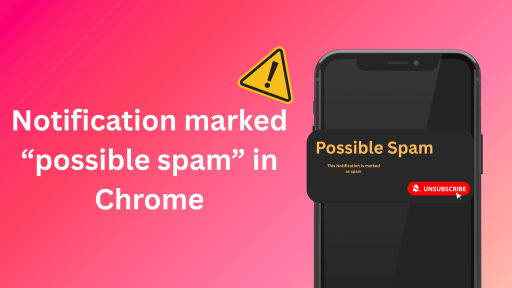
There’s a browser risk, too. Since 2020, Google Chrome has added protections against abusive notifications. Chrome 84 began auto-enrolling sites with abusive permission requests or abusive notifications in a quieter permission UI. Then Chrome 86 added enforcement against sites sending abusive content, such as malware links or fake system messages. Ordinary ads aren’t the same as abuse. Still, you don’t control what a third party sends under your name.
So the trade-off looks like this:
- Upside: $0 cost and possible ad revenue.
- Downside: less control over content, more unsubscribes and a weaker reader relationship.
- Unknown: how much an ad-funded plan earns for your niche and region.
How can you check whether a push service will send ads?
You can check by reading four things before you install. I do this for every free tool:
- Read the pricing page for words like “monetize”, “ads”, “sponsored” or “revenue share”.
- Search the terms of service and privacy policy for rights to send “promotional” or “third-party” content to your subscribers.
- Check who owns the subscriber data and whether you can export it.
- Subscribe to your own site on a test device, and watch what arrives for a few weeks.
Also look for opt-in toggles. PushEngage’s pricing page lists a “Monetization Opt-in” item on its free plan without explaining it there, so ask its team what it covers. If anything is unclear, get the answer in writing.
Is a “Powered by” credit the same as an ad?
No. A “Powered by” credit isn’t the same as an ad. A branding credit is a small vendor label on your opt-in prompt or notification, while an ad is paid third-party content sent to your subscribers. For example, Gravitec’s free plan includes an unremovable “Powered by Gravitec.net” credit, which is branding, not advertising. Credits are a minor cost. Ads change who controls the message, which is why I treat them very differently when I pick a free plan.
Who should accept an ad-supported push plan?
An ad-supported plan can make sense for a high-traffic publisher that already runs display ads and wants extra revenue from push. In that case, the push channel is part of the ad business anyway.
For most other sites, I’d avoid it. Ecommerce stores, SaaS products, B2B blogs and brands rely on trust, and an unexpected ad in their notification costs more than a small monthly fee. If you’re curious about the advertiser side of push ads, our post on whether push ads work for CPA marketing covers it.
What are the ad-free alternatives to free push plans?
The ad-free alternatives are capped free plans, paid SaaS plans and self-hosted software:
| Option | Example | Cost | Ads to subscribers |
|---|---|---|---|
| Capped free plan | Webpushr, SendPulse | $0 up to 10,000 subscribers | None described |
| Paid SaaS plan | OneSignal Growth | From $19/mo plus usage | None described |
| Self-hosted licence | LaraPush | One-time, from $499 + VPS | None |
For a side-by-side of costs at larger list sizes, see the cheapest push notification service for 100k+ subscribers.
Where does LaraPush fit?
LaraPush is a self-hosted web push panel, so the subscriber list sits on your own server and LaraPush sends no sponsored or injected ads to your subscribers. You buy a one-time licence from $499 (see LaraPush pricing), with unlimited subscribers on one licensed server. The trade-offs: there’s no free plan, and you run your own VPS. You can see what’s included on the LaraPush features page, and the iZooto vs LaraPush comparison covers the publisher angle.
Frequently asked questions
Most mainstream free plans, such as Webpushr, OneSignal and SendPulse, are funded by subscriber or send limits, and their pricing pages don’t describe ads. Ad-supported programmes, such as iZooto’s Monetize plan, are free because native ads are sent to your push audience.
According to iZooto’s Monetize page, checked Oct 31, 2026, it sends native ads on web and app push notifications and shares ad revenue with the publisher, with net 60-day payouts. The plan offers unlimited subscribers and up to 10 notifications a day.
They can hurt subscriber trust and raise unsubscribes, because readers opted in to hear from you, not advertisers. Chrome also restricts sites that send abusive notification content, such as malware links or fake system messages, so control over content matters.
Read its pricing page and terms for words like monetize, sponsored or third-party content. Check whether you can export your subscribers. Then subscribe to your own site on a test device and watch what arrives for a few weeks.
No. LaraPush is self-hosted, so your subscriber list lives on your own server, and it sends no sponsored or injected ads. It’s a one-time licence from $499, with no free plan.