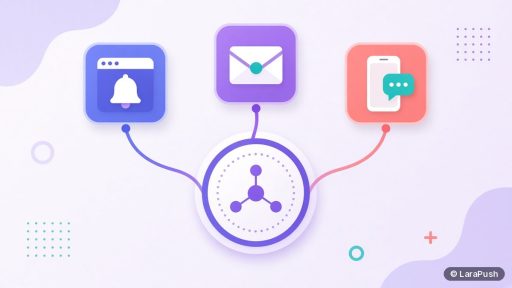
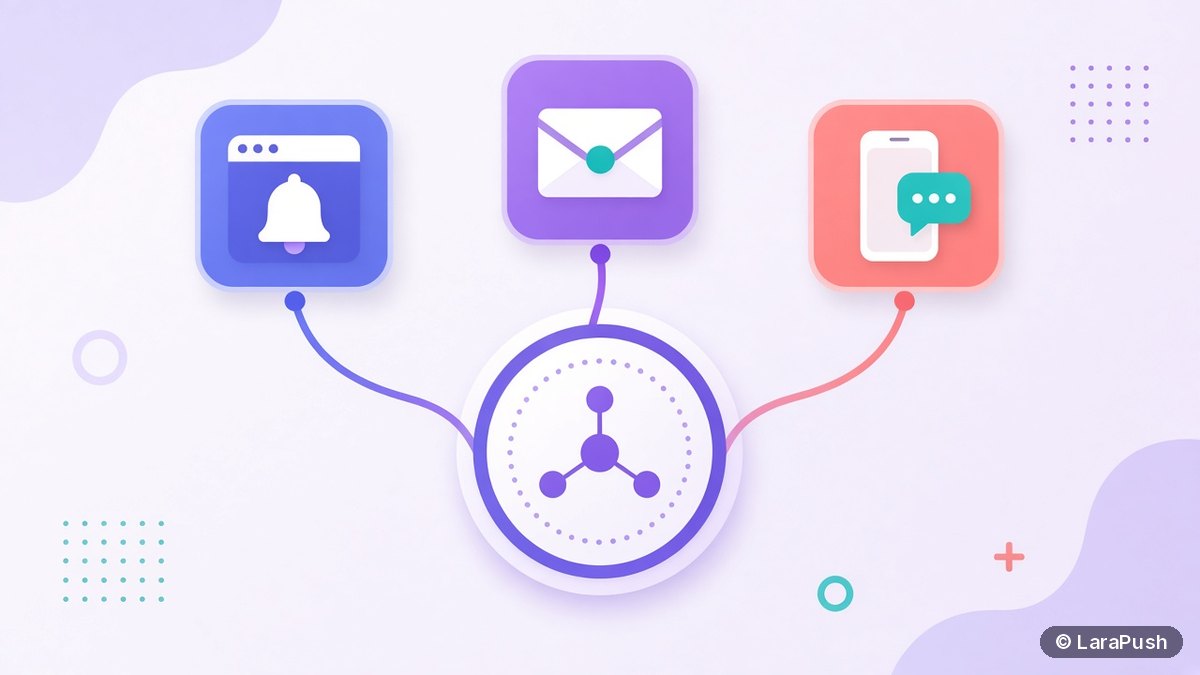

Web push, email and SMS are complementary channels, not substitutes. Use web push for timely, permission-based alerts to people already on your site; email for richer storytelling and nurture; SMS for urgent, high-priority messages where you have explicit phone consent. “Better” depends on the job, the cost and the consent you hold.
People often ask whether push notifications are better than email. The honest answer is: better at what? Speed and immediacy favour push and SMS. Depth, deliverability infrastructure and long-form content still favour email. Below is a practical comparison so you can pick the right channel for each message.
How do web push, email and SMS differ?
| Dimension | Web push | SMS | |
|---|---|---|---|
| Consent model | Browser notification permission | Email opt-in / legitimate interest rules by region | Explicit phone consent; strict carrier and legal rules |
| Where it appears | OS / browser notification surface | Inbox | Text message thread |
| Typical strength | Speed, short alerts, return visits | Rich layout, history, automation journeys | Urgency, very high open attention |
| Message length | Short title + short body | Long-form friendly | Very short; costly per character/segment |
| Cost shape | Software / self-hosted panel; no per-SMS fee | ESP subscription or usage | Per-message carrier fees |
| Tracking | Clicks (no reliable open like email) | Opens (noisy), clicks, conversions | Delivery and clicks if using short links |
| Coverage gaps | Needs a supporting browser; iPhone needs Home Screen PWA rules | Nearly universal | Needs a phone number |
Web push rides the Push API and Notifications API. Email rides SMTP and mailbox providers. SMS rides mobile networks. Different pipes, different failure modes.
Are push notifications better than email?
For time-sensitive alerts to an already-subscribed web audience, push is usually the better first touch: it can appear within seconds and does not compete with a crowded inbox. For newsletters, receipts, onboarding sequences and anything that needs scanning later, email is still better.
Public benchmarks also live on different scales. Litmus’s State of Email 2025 survey work reported that many marketers see email CTR in the 1–5% bands (with a sizable share between 3–5%) (MediaPost summary of Litmus State of Email 2025; Litmus State of Email reports hub). Separate web push vendor reports often show broadcast web push CTR near ~1%, with targeted and automated sends higher (PushPushGo e-commerce web push benchmarks, 2025). Those numbers are not a contest score — the lists, creative and intents differ.
So: push is not “better than email”. Push is better when the job is a short, urgent nudge. Email is better when the job is a complete message people may reopen.
When should you use SMS instead?
Use SMS when the message is critical and you already have clear phone consent: one-time passwords, fraud alerts, delivery exceptions, appointment reminders. SMS is expensive at scale and easy to abuse, so it is a poor default for marketing blasts.
Compared with web push:
- SMS reaches people who never visit your website and never granted browser permission.
- SMS does not depend on a service worker or browser support matrix.
- SMS usually requires a different compliance stack (consent records, STOP handling, quiet hours).
If budget is tight and the audience is already on-site regularly, web push often delivers more alerts per dollar than SMS. If the audience is offline-first and you have numbers, SMS wins for urgency.
How should you combine the three channels?
Think in jobs, not in rivalry.
- Acquisition of attention on-site → web push opt-in. Ask after value is clear (web.dev Permission UX).
- Deep content and lifecycle → email. Welcome series, weekly digests, product education.
- Critical account events → SMS or email transactional, depending on urgency and consent.
- Same campaign, staged touches. Example: push for “story just published”, email for “weekly round-up”, SMS only for “your package needs action”.
- Shared analytics language. Tag every link with UTMs so you compare conversions, not vanity opens.
Avoid sending the identical promo on all three channels in the same hour unless the audience expects it. Fatigue shows up as unsubscribes, Blocks and spam complaints.
How do you choose a channel for a specific message?
Use this quick decision path before you write creative.
- Is the message useful within minutes? Prefer web push or SMS.
- Does the reader need a record they can search later? Prefer email.
- Do you have browser permission, an email address, a phone number — or more than one? Start with the consent you already hold.
- Is the cost per send material? SMS usually is; web push and email usually are not at the same scale.
- Will a duplicate touch help or annoy? If email already covers the update in full, skip the push, or make the push a one-line alert that deep-links into the email’s topic page.
Publishers often do well with push for “just published” and email for “weekly digest”. Ecommerce often does well with push for cart and price alerts, email for nurture, and SMS for delivery exceptions. Product apps may still need native app push, which is outside this web comparison — see web push vs app push for that split.
What limits should you respect on each channel?
- Web push: Permission can be denied permanently at the browser prompt; Chrome may auto-revoke noisy low-engagement senders (Google, Oct 2025). iPhone web push needs iOS 16.4+ and Home Screen install (WebKit).
- Email: Deliverability, list hygiene and regional marketing rules (for example GDPR consent expectations in the EU) dominate outcomes.
- SMS: Per-message cost, quiet-hour rules and carrier filtering. One bad blast damages the number’s reputation.
For push-specific habits, see web push best practices for publishers and push notification metrics. Browser coverage detail lives in browsers that support web push.
Where does LaraPush fit?
LaraPush covers the web push leg: a self-hosted panel on your VPS, FCM delivery, campaigns, segmentation, automations on higher plans, and analytics for sent/delivered/clicked. It is not an email ESP or an SMS gateway. Licence is one-time for one server (Startup from $499, Pro from $799; no free plan), with unlimited domains on that server. See features, pricing and migration if you are consolidating push providers. For vendor landscape context, use the best push notification services and tools pillar.
Frequently asked questions
Not overall. Web push is usually better for short, timely alerts to people who granted browser permission. Email is usually better for richer content, records and nurture sequences. Use both with different jobs.
No. Replace duplicate blasts, not the channel. Keep email for newsletters and transactional mail; add web push for instant return visits and alerts.
SMS often wins raw attention for urgent messages, but it costs more per send and needs phone consent. Web push is typically more economical for frequent content alerts to site visitors.
You can, but stagger timing and adapt creative. Identical triple sends in one hour create fatigue and make attribution messy.
Start with email if you already collect addresses, and add web push once you have steady on-site traffic and a clear alert value. Add SMS only for high-urgency use cases with proper consent.