
To secure a self-hosted push notification server, keep the OS and panel updated, allow only SSH, HTTP and HTTPS through the firewall, use SSH keys instead of passwords, serve the panel over HTTPS, protect the admin login, and keep VAPID keys, Firebase credentials and the database private and backed up off the server. That covers most real-world risk.
Self-hosted push notification security is less exotic than people expect. The panel is a normal web app on a normal Linux server, so the same hardening rules apply. What makes it special is the data: subscriber tokens and the keys that let anyone message your whole list. Below is the checklist I use, in the order I’d do it on a fresh VPS.
What are you actually protecting on a push server?
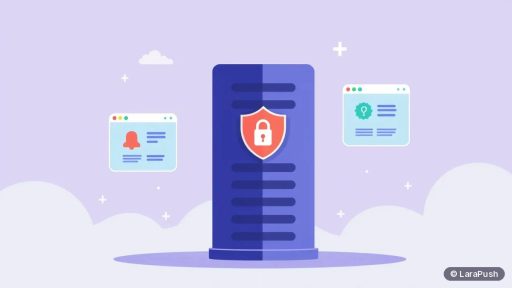
You’re protecting four things: the admin panel login, the subscriber database, the sending credentials (VAPID keys and Firebase project credentials), and the server itself. If someone gets the credentials plus the subscriber list, they can send notifications to your audience under your name.
| Asset | Why it matters | Main protection |
|---|---|---|
| Admin panel | Full control of campaigns and settings | Strong unique password, limited admin accounts |
| Subscriber database | Endpoints and keys for every subscriber | No public database port, encrypted off-server backups |
| VAPID keys and Firebase credentials | Allow sending to your subscriptions | Keep out of public repos, restrict file access |
| The VPS | Hosts everything above | Updates, firewall, SSH keys |
A push subscription is an endpoint URL plus encryption keys, as MDN explains for the PushSubscription object. The VAPID private key signs each send, as defined in RFC 8292. So treat the key like a password, not like config trivia.
How do you secure self-hosted push notification server access?
Lock down access first, because most break-ins on small VPSs start with weak SSH or an exposed service. Use SSH keys, disable password logins, and open only the ports you need.
- Create a non-root user with sudo rights.
- Add your SSH public key, then disable password authentication in the SSH config.
- Disable direct root login over SSH.
- Enable a firewall (UFW on Ubuntu) that allows only SSH, HTTP (80) and HTTPS (443).
- Install Fail2ban or a similar tool to block repeated failed logins.
- Keep the MySQL port closed to the internet; the panel connects locally.
Ubuntu’s UFW documentation covers the firewall basics. If your VPS provider offers a cloud firewall, use it as a second layer. That way a mistake on the server doesn’t instantly expose everything.
Why does the panel need HTTPS?
The panel needs HTTPS because it handles logins and subscriber data, and because browsers only allow push in secure contexts. A free Let’s Encrypt certificate with automatic renewal is the usual choice.
Set a reminder to check renewal anyway. An expired certificate is one of the most common causes of a “working” panel suddenly failing. I explain the browser-side rule in more detail in do you need HTTPS for web push.
How should you protect the admin login?
Protect the admin login with a long unique password stored in a password manager, and give admin rights only to people who need them. Remove accounts as soon as someone leaves the team.
In addition, put the panel on its own subdomain, such as push.example.com, rather than inside your main site. A subdomain keeps a problem on one app from spreading to the other. If your panel supports two-factor authentication or IP restrictions, turn them on. Some teams also put the dashboard behind a proxy such as Cloudflare; I cover the trade-offs in using Cloudflare with a self-hosted push panel.
How do you keep keys and credentials safe?
Keep VAPID keys, Firebase credentials and database passwords out of public places: not in a public Git repository, not in screenshots, and not in shared chat threads. Store copies in a password manager or an encrypted backup.
Losing these keys is as bad as leaking them. Existing subscriptions are tied to the key pair that created them, so if the private key is gone, you can’t send to that list again. That’s why the backup plan matters as much as the lock. My guide on backing up a self-hosted push panel lists exactly what to save, and the VAPID keys guide explains how the keys work.
How often should you update the server and panel?
Apply OS security updates at least weekly, and update the panel when the vendor releases fixes. On Ubuntu, unattended-upgrades can install security patches automatically.
Panel updates deserve more care, because a bad update can stop sending. Take a snapshot, read the release notes, then update in a quiet window. I walk through that routine in how to update a self-hosted push panel safely.
What should you monitor?
Monitor failed logins, disk space, memory, the queue worker and certificate expiry. Most incidents show warning signs first, such as a filling disk or a growing queue.
| Signal | What it can mean | Action |
|---|---|---|
| Many failed SSH logins | Brute-force attempts | Confirm password login is off, check Fail2ban |
| Unknown admin user | Account compromise | Remove it, rotate passwords, review logs |
| Unexpected campaigns | Stolen login or API key | Revoke keys, change passwords |
| Disk nearly full | Logs or backups piling up | Rotate logs, move backups off-server |
| Certificate near expiry | Renewal failing | Fix renewal before it lapses |
An external uptime monitor on the panel’s HTTPS address is useful too. It alerts you even if the server itself can’t. For what happens during an outage, see what happens if your self-hosted push server goes down.
Is self-hosted push less secure than SaaS?
Not by default. A SaaS provider hardens its own servers, while with self-hosting that job is yours. In return, your subscriber data sits on a server you control instead of a vendor’s.
In short, the risk moves rather than disappears. If you can follow the checklist above, a small self-hosted server is a reasonable place to keep your list. If nobody on the team will apply updates, that’s a real argument for SaaS. I cover this trade-off in the disadvantages of self-hosted push notifications.
Where does LaraPush fit?
LaraPush is a self-hosted panel you run on your own VPS, so subscriber tokens are generated and stored on your server. Installation is free and automated from the customer portal, and the panel includes server stats, uptime and queue monitoring. The Premium Add-on adds automated Google Drive backups.
You’re still responsible for the server itself: updates, firewall and SSH access. The licence covers one server, and there’s no free plan. Plans start from $499 one-time; check the pricing page for the current price, and the setup guide for installation details. To compare options first, see my guide to push notification services.
Frequently asked questions
Turn off SSH password logins and use SSH keys, then enable a firewall that allows only SSH, HTTP and HTTPS. Weak SSH access and exposed services cause many small-server compromises. After that, keep the OS updated and protect the panel’s admin login with a strong unique password.
Keys alone aren’t enough; they also need the subscription endpoints from your database. With both, they could send messages to your list. That’s why the database and keys need the same protection: no public database port, restricted file access and encrypted off-server backups.
It’s safer and simpler to run it separately, on its own VPS and subdomain. A problem or traffic spike on the website then doesn’t affect the panel, and the reverse is true too. It also keeps the panel’s queue workers and database apart from your CMS.
It’s optional. A server firewall, SSH keys, HTTPS and a strong admin login cover the main risks. A web application firewall or a proxy such as Cloudflare can add protection for the dashboard, but test it so it doesn’t block API calls or subscription requests.
Look for unknown admin users, campaigns you didn’t send, new SSH keys, unexpected processes or sudden spikes in CPU or outgoing traffic. If you see any of these, revoke API keys, change passwords, review logs and restore from a known good backup if needed.